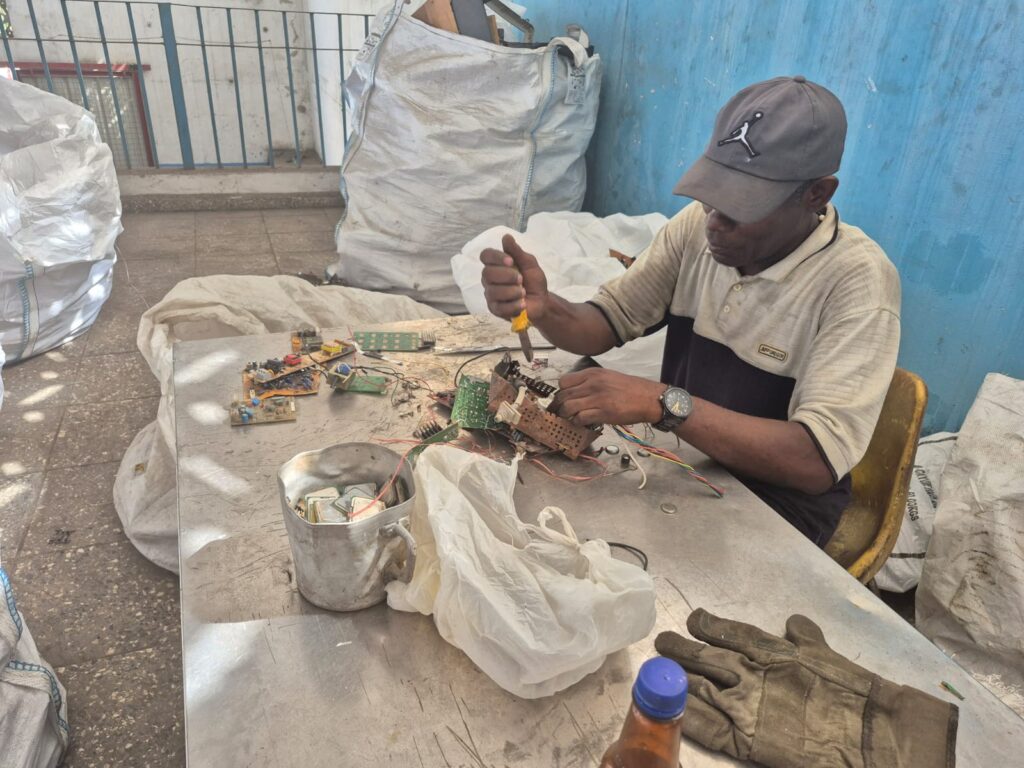
The regional flow series brings together estimates for 12 countries, while the preceding country work comprises 11 national assessments. The Dominican Republic contributes to the flow analysis without a national assessment in this project. The 2030 values and the 20% formal-recycling case are projections and scenarios, not current outcomes. Data on actual collection and recycling rates in the region are almost absent, also due to the huge presence of the informal sector – which is usually not accounted for.
| Measure | Study estimate | Status |
|---|---|---|
| E-waste generated in 2010 | 93,740 tonnes | Historical estimate |
| E-waste generated in 2022 | 170,650 tonnes | Latest common historical reference year |
| E-waste generated in 2030 | 232,930 tonnes | Projection |
| Formal recycling in the 2030 scenario | approximately 47,000 tonnes | Assumes 20% formal recycling |
| Gross value of metals in that scenario | approximately US$29 million | Before collection and treatment costs |
| Emissions avoided in that scenario | approximately 69,000 tonnes CO₂-eq | Modelled benefit |
The accompanying policy analysis examines the feasibility of EPR: a system in which producers and importers help fund the collection and environmentally sound management of products once discarded. It recommends regional coordination, national implementation and a phased approach. The earlier national work and training created country-level evidence and helped national partners understand how to apply the estimation tools; the regional report now uses that foundation to examine coordination and financing at a larger scale.
Please Read the full Reports:
Regional Report EN | Regional Report ES | The National Assessments